
Most businesses don’t lose money on SEO or PPC. They lose it by picking one, going all in, and wondering why the phone stops ringing in month four or why the ad bill never goes down.
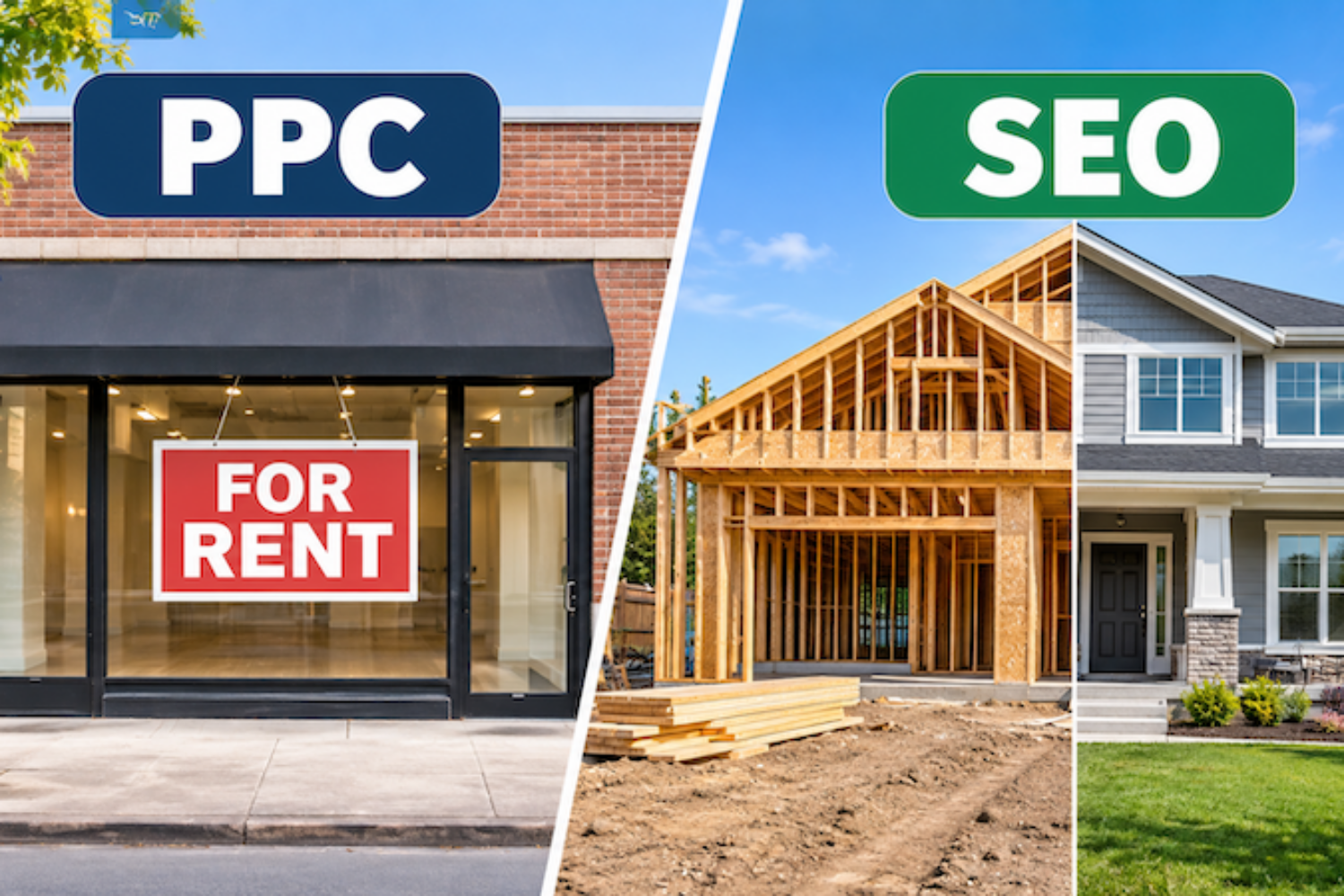
PPC rents you the storefront. SEO builds you the building. You need both, in the right order.
Quick Summary
| Topic | The Short Answer |
|---|---|
| PPC is best for | Fast leads, testing offers, seasonal pushes, launches |
| SEO is best for | Lowering acquisition cost, long-term visibility, compounding traffic |
| Months 1–3 | Lean heavily into PPC. Lay the SEO foundation quietly. |
| Months 4–6 | Move to a hybrid. Let paid data steer your content. |
| Months 7–12 | Let organic carry more volume. Cut wasted ad spend. |
| Biggest mistake | Treating either channel as “set it and forget it” |
The Real Question Isn’t “Which One?”
Every month, a business owner asks me some version of the same thing: “Should I spend my budget on SEO or Google Ads?”
Wrong question.
The right question is: What do you need from your marketing in the next 90 days, and what do you need from it in 12 months?
Those answers are almost never the same. Your 90-day need is usually cash flow. Your 12-month need is usually profitability. Each channel handles one of those far better than the other.
I’ve spent years running both sides of this, managing paid search campaigns and building organic search programs, for local service businesses fighting for the map pack in crowded metros like Houston and for brands competing nationally. The businesses that win don’t pick a side. They sequence the two.
Renting vs. Buying: The Only Metaphor You Need
Think of your digital visibility as real estate.

Renting gets you open tomorrow. Buying gets you equity.
PPC Is Renting
You sign a lease, get the keys, and open your doors tomorrow.
- Speed: Ads can go live the same day.
- Control: Pick your keywords, locations, hours, and budget.
- Flexibility: Scale up for busy season. Scale down when you’re booked.
- The catch: The day you stop paying rent, you get evicted. Traffic drops to zero.
Renting isn’t a bad thing. Smart businesses rent all the time. But you never build equity in a rental.
SEO Is Buying
You buy the land, pour the foundation, and build.
- Slow start: Real organic traction usually takes several months.
- Upfront cost: Content, technical fixes, and authority building cost money before they pay off.
- Compounding value: Every page that ranks keeps working without a per-click charge.
- The catch: You can’t move in tomorrow. And a building still needs maintenance.
The point: rent while you build. Then rent only when it makes strategic sense.
When to Buy Traffic (PPC Wins)
Lean into paid search when:
- You need leads this month. Payroll doesn’t wait for rankings.
- You’re launching something new. A new service, location, or product has no organic history.
- You want to test an offer. Find out in two weeks which message converts.
- Demand is seasonal. HVAC in July. Tax prep in March. Strike while people are searching.
- The keyword is a bloodbath organically. Some terms are owned by directories and national brands. Paid is your way onto page one.
- You need data fast. PPC tells you exactly which search terms turn into revenue.
Why it matters: PPC is the fastest feedback loop in marketing. Even if SEO is your long-term play, paid data shows you where to point it.
When to Build Organic Equity (SEO Wins)
Lean into SEO when:
- Your cost per lead keeps climbing. Ad auctions rarely get cheaper.
- Your buyers research before they buy. Guides, comparisons, and FAQs win those searches.
- You serve a defined local area. Map pack visibility is the highest-intent real estate in local search.
- You plan to be around in three years. SEO rewards patience.
- Trust matters in your industry. Many searchers skip the ads and click the organic results.
- You want an asset. Rankings and traffic add real value to your business.
Why it matters: SEO is how you drive down your customer acquisition cost (CAC) over time. Every lead that comes in organically is one you didn’t pay a click fee for.

Illustrative: paid traffic stops when the budget does. Organic traffic keeps building.
The Messy Reality Nobody Puts in the Brochure
Before we get to the blueprint, here’s what you need to know about how both channels actually work right now.
Exact Match Isn’t Exact Anymore
If you still think “exact match” means Google shows your ad only for that exact phrase, that hasn’t been true for years. Google’s own documentation now says exact match can trigger on searches with the same meaning or intent as your keyword. That includes close variants, reordered phrases, and searches Google decides mean the same thing.

One exact match keyword, many different searches. This is why you check the search terms report weekly.
Sometimes that works in your favor. Often it doesn’t. I break this down in detail in Exact Match vs. Broad Match + Smart Bidding.
The same shift hits SEO. Google ranks pages for topics and intent, not keyword density. Pages built to answer a searcher’s real question beat pages stuffed with a phrase. Google says so directly in its guidance on creating helpful, people-first content.
Google’s “Autopilot” Is Built for Google
Google Ads will happily suggest you:
- Expand to broad match.
- Raise your budget.
- Accept auto-applied recommendations.
- Let Performance Max “figure it out.”
Some of these suggestions help. Many of them mainly help Google spend your money faster.
PPC needs active management. That means:
- Reviewing search term reports every week.
- Building and maintaining negative keyword lists.
- Checking conversion tracking for accuracy.
- Rejecting recommendations that don’t fit your goals.
Pro tip: Turn off auto-applied recommendations on day one. Review every suggestion yourself before you accept it.

Day-one setting: auto-apply off. You approve the changes, not Google.
SEO Isn’t Passive Either
“Set it and forget it” doesn’t work organically either. Competitors publish. Algorithms update. Your Google Business Profile needs fresh reviews and photos. A site that ranked in 2024 can quietly slide by 2026 if nobody’s watching.
The 12-Month Blueprint: Rent, Build, Then Own
Here’s the framework I use with clients who want a balanced plan. Adjust the percentages to your industry, competition, and cash position, but the order stays the same.

The order matters more than the exact percentages: rent, build, then own.
Phase 1 (Months 1–3): Rent Aggressively, Pour the Foundation
Suggested split: roughly 70–80% PPC / 20–30% SEO
Your goal is cash flow and data. Ads keep the lights on while SEO takes root.
PPC priorities:
- Launch tightly themed campaigns around your highest-intent keywords.
- Set up conversion tracking before spending a dollar. Calls, forms, bookings.
- Start with controlled match types and a solid negative keyword list.
- Geo-target only the areas you actually serve.
- Review search terms weekly. Cut waste immediately.
SEO priorities:
- Run a full technical audit. Fix crawl, speed, and indexing issues.
- Optimize your core service pages. Titles, headers, internal links.
- Claim and fully build out your Google Business Profile.
- Clean up name, address, and phone consistency across directories.
- Start a steady review generation process.
Why it matters: The work you do here won’t show big results yet. But every month you delay the foundation is a month added to your SEO timeline.
Pro tip: Export your PPC search term data every month. It’s free keyword research based on real revenue, not guesses. If you need quick wins on the organic side, start with these easy on-site SEO tweaks.
Phase 2 (Months 4–6): Shift to a Hybrid
Suggested split: roughly 50–60% PPC / 40–50% SEO
Your goal is to let each channel feed the other.
PPC priorities:
- Pause or trim keywords that spend but don’t convert.
- Double down on the search terms with the lowest cost per lead.
- Test new ad copy and landing page offers.
- Layer in remarketing to recapture visitors from organic traffic.
SEO priorities:
- Build content around your best converting PPC keywords.
- Create service-area or location pages that answer real local questions.
- Earn local links. Chambers, sponsorships, industry associations.
- Track which pages start ranking on page two. Those are your next pushes.
Why it matters: This is where the strategy starts paying off. Your paid data tells you exactly which organic pages to build. Your organic pages start lifting your Quality Scores and conversion rates on paid.

Each channel makes the other one cheaper.
Pro tip: When a keyword starts ranking organically in the top three and you’re running ads on it, test pulling the ad in a small region for a few weeks. Measure total leads, not just organic clicks. Sometimes you keep both. Sometimes you save the spend.
Phase 3 (Months 7–12): Let Organic Carry the Weight
Suggested split: roughly 30–40% PPC / 60–70% SEO
Your goal is a lower blended customer acquisition cost.
PPC priorities:
- Keep ads on high-value, high-competition terms where organic can’t win.
- Use paid for seasonal spikes, promotions, and new service launches.
- Protect your brand terms if competitors bid on your name.
- Shift budget from discovery campaigns to proven winners.
SEO priorities:
- Expand content to cover the full buyer journey, not just “near me” searches.
- Refresh pages that are slipping before they fall off page one.
- Keep building authority with links and reviews.
- Defend and grow your map pack presence.

In competitive metros like Houston, the map pack is the most valuable real estate on the page.
Why it matters: By now, organic traffic should be producing leads you aren’t paying per click for. That pulls your blended CAC down every month, even if your total budget stays flat.
Pro tip: Calculate blended CAC each quarter: total marketing spend divided by total new customers from all channels. That’s the number that tells you whether the plan is working, not clicks or rankings alone.
The 12-Month Blueprint at a Glance
| Phase | Months | PPC Share | SEO Share | Main Goal |
|---|---|---|---|---|
| Rent | 1–3 | 70–80% | 20–30% | Cash flow and data |
| Hybrid | 4–6 | 50–60% | 40–50% | Channels feed each other |
| Own | 7–12 | 30–40% | 60–70% | Lower blended CAC |
These ranges are starting points. A brand-new business with no organic presence may stay paid-heavy longer. An established site with authority may shift faster.
Old Advice vs. Current Reality
| Old Advice | Current Reality |
|---|---|
| “Exact match gives you total control.” | Google matches on intent. Monitor search terms weekly. |
| “Just let Google’s recommendations optimize it.” | Recommendations serve Google’s goals first. Review each one. |
| “SEO is free traffic.” | SEO costs money and time upfront. Traffic is free per click, not free to earn. |
| “Rank for the keyword, win the business.” | Rank for the intent. Answer the real question. |
| “Pick SEO or PPC.” | Sequence them. Rent first, build alongside, own later. |
| “Local SEO is just a Google listing.” | Map pack wins need reviews, citations, local content, and links. |
Your Budget Allocation Checklist
Before you commit your next 12 months of spend, check off each one:
-
Conversion tracking works. Calls, forms, and bookings all record correctly. If tracking is wrong, every decision after it is wrong.
-
You know your cost per lead. Pull it for each channel separately, not as one blended guess.
-
Auto-apply recommendations are off. You approve every change to your account, not Google.
-
Negative keyword lists exist. Someone reviews the search terms and updates them every week.
-
A technical SEO audit is done. Or at least on the calendar. Content can’t rank on a site Google struggles to crawl.
-
Your Google Business Profile is complete. Services, categories, photos, and a steady flow of fresh reviews.
-
PPC data feeds your content plan. Your top-converting search terms become your next organic pages.
-
You track blended CAC. Every quarter, across all channels. That’s the number that tells you if the plan is working.
-
Each channel has an owner. Someone reviews PPC and SEO every month. Unwatched channels leak money.
Frequently Asked Questions
How long does SEO take to work?
Most businesses see early movement within three to six months, with stronger results by months six to twelve. Competition, your site’s history, and how consistently you invest all change that timeline.
Can I just run PPC forever?
You can. Plenty of businesses do. But you’ll pay for every visitor forever, and click costs in competitive industries tend to rise. SEO gives you a hedge.
Should I stop ads once I rank organically?
Not automatically. Owning both the paid and organic spot on page one often produces more total leads than either alone. Test it in a small region before cutting spend everywhere.
Is local SEO different from national SEO?
Yes. Google says local results are based mainly on relevance, distance, and prominence, and your review count and rating feed into that. National SEO leans more on content depth and link authority. Many businesses need both.
What’s a realistic starting budget?
It depends on your industry’s click costs and how competitive your market is. A plumber in a major metro faces very different auction prices than a niche B2B firm. Start by measuring what a lead is worth to you, then work backward.
Can I manage Google Ads myself?
You can, if you have the time to check it every week. The businesses that struggle are the ones that launch a campaign, trust Google’s suggestions, and check back in three months.
The Move I’d Make Tomorrow Morning
Pull up your last 90 days of marketing spend. Divide it by the number of new customers it produced. That’s your current CAC.
Now ask one question: If you stopped paying for ads tomorrow, how many of those customers would still find you?
If the answer is “almost none,” you’ve been renting without building. Start pouring the foundation now, and keep the ads running while it sets. A year from now, you’ll want to own more of your visibility and rent less of it.
Want a second set of eyes?
I’ll review your website, your Google Ads account, and your organic visibility, then show you where your budget is leaking and where your next 12 months of growth should come from. Request a free website analysis →
Explore how I help with Paid Search Management and Search Engine Optimization.
Which way is your budget leaning right now, renting or building? Let me know in the comments.

